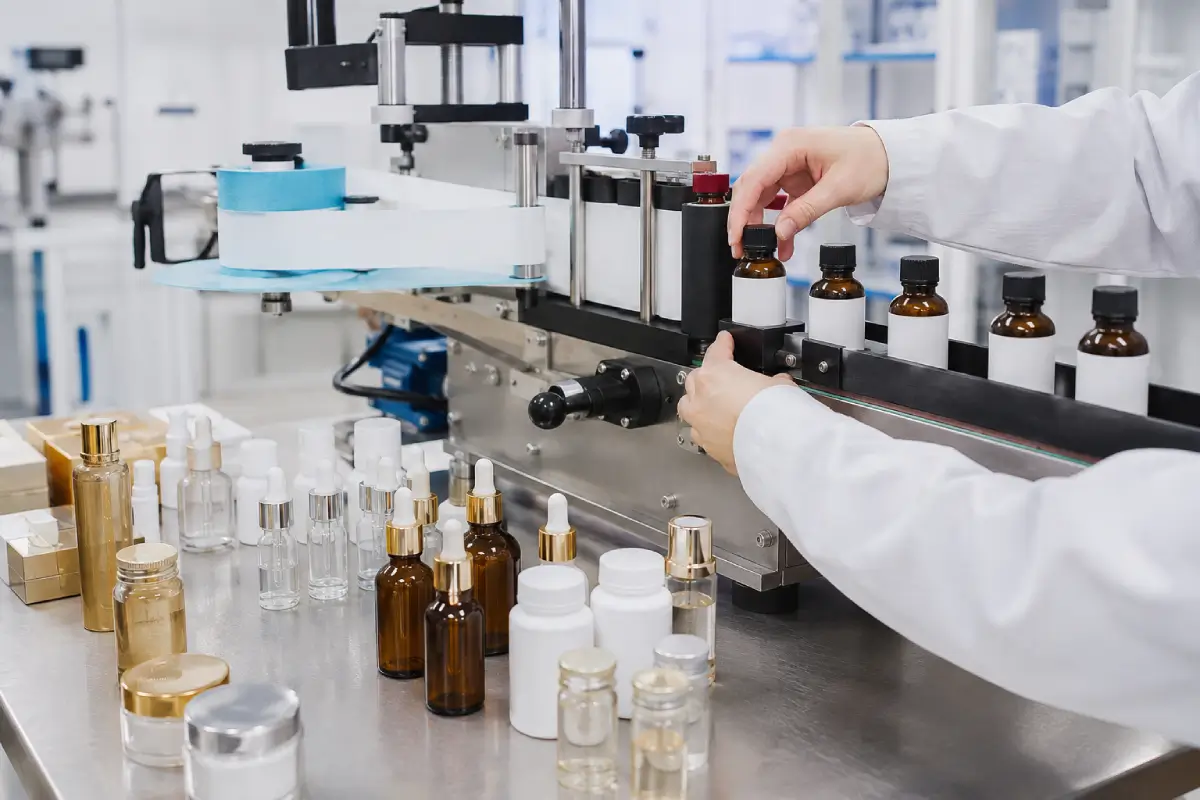
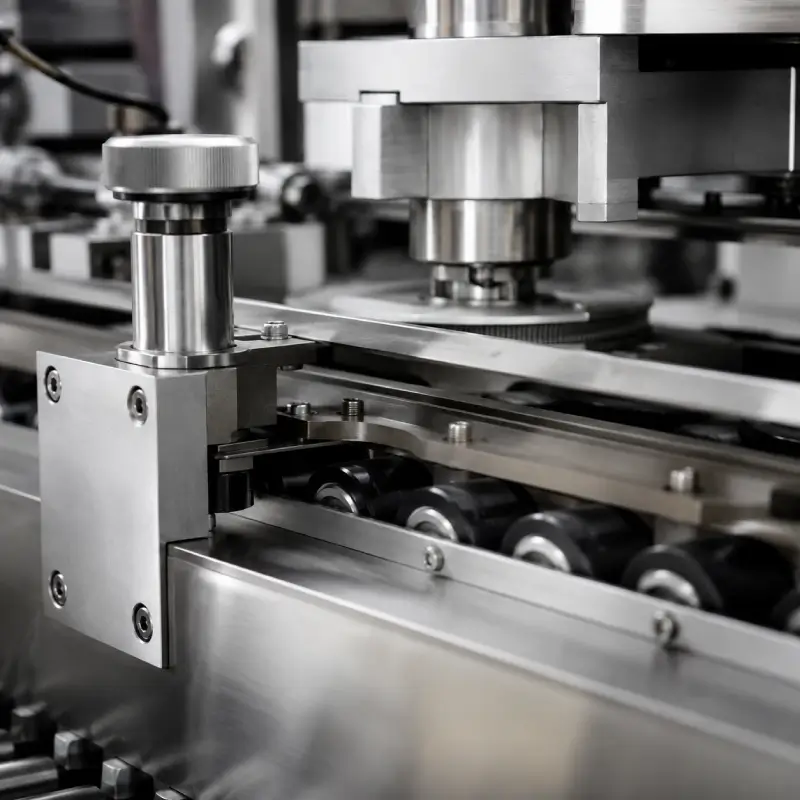
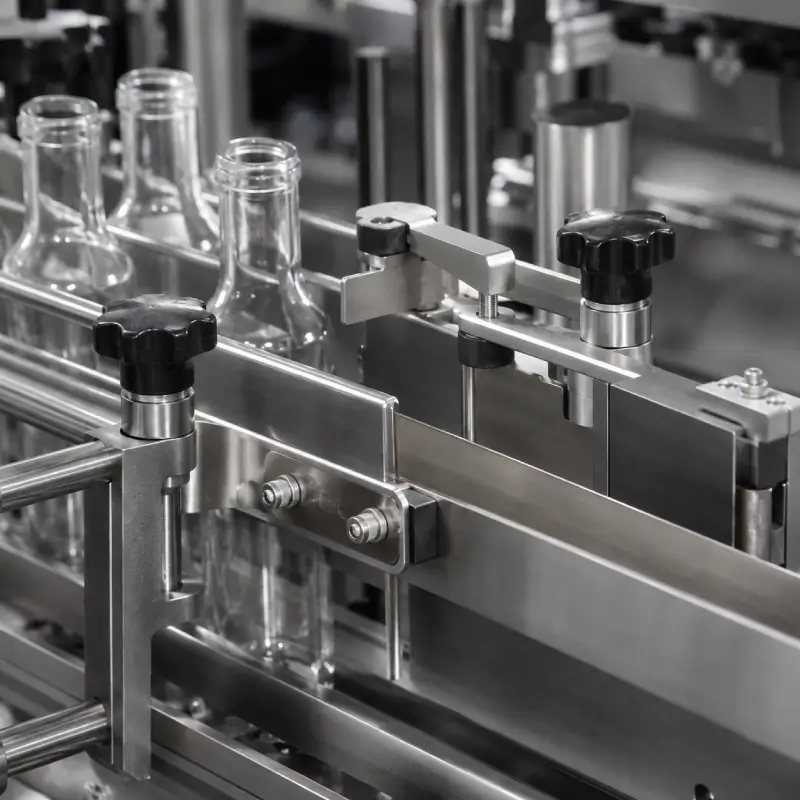
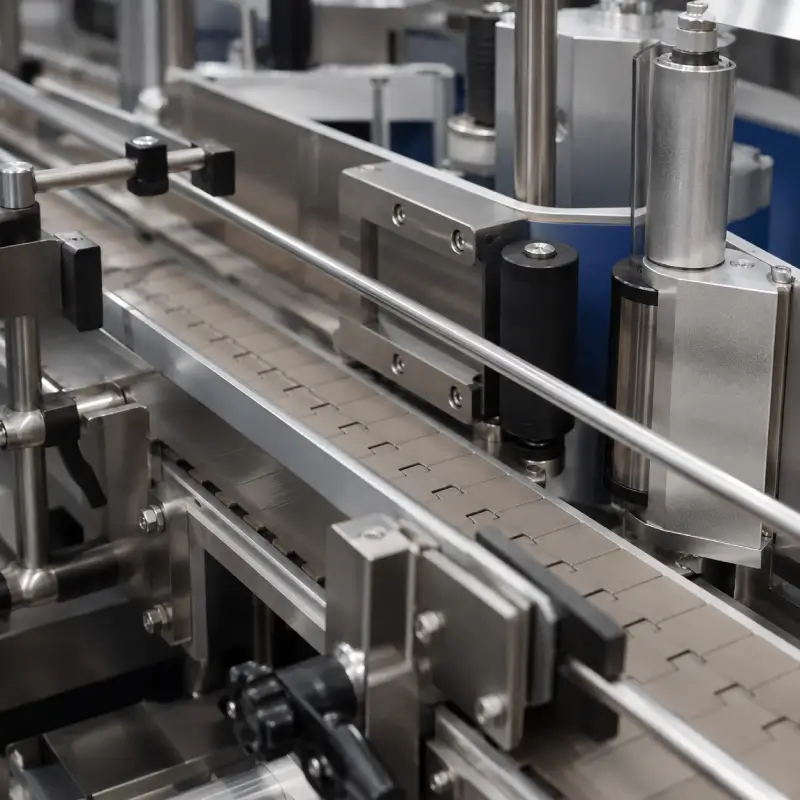
Products enter the labeling station manually or through an automated conveyor.
Sensors identify bottle position and trigger the labeling process.
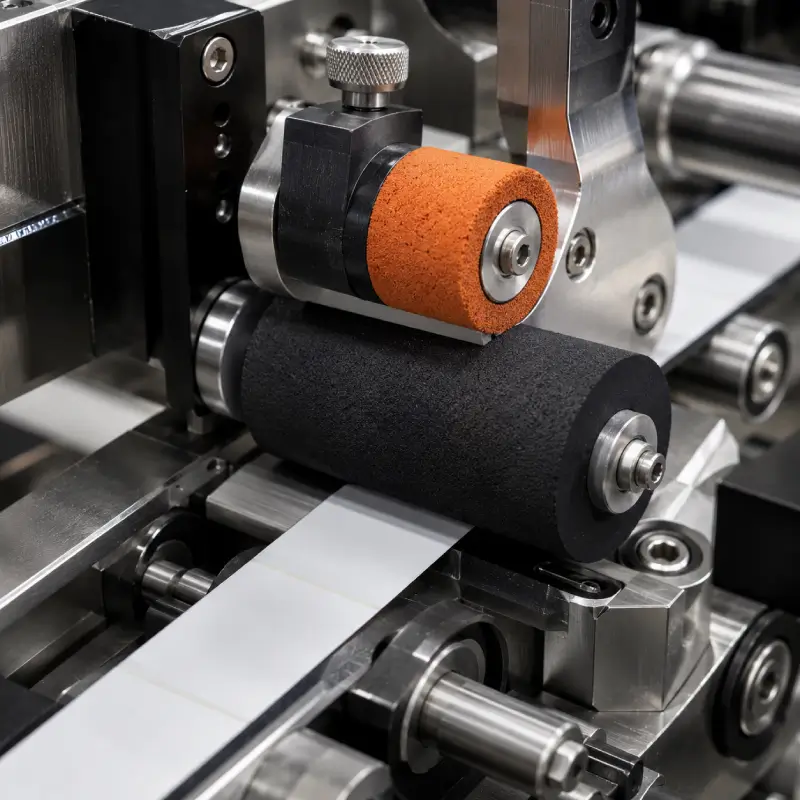
The label is released at the correct timing and position.
The bottle rotates while the label is applied and pressed securely onto the surface.
Labeled products exit the station and continue to the next packaging process.
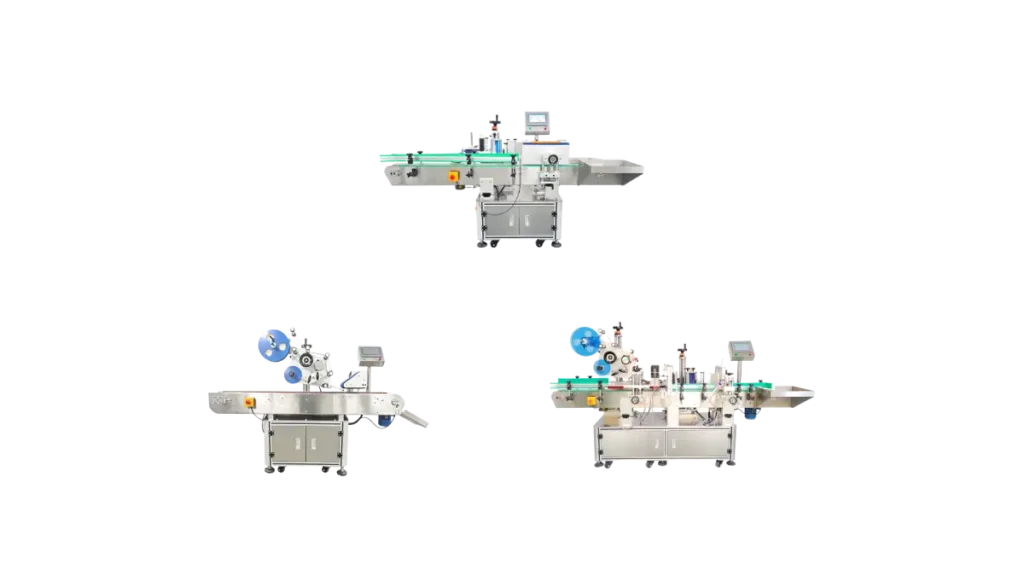
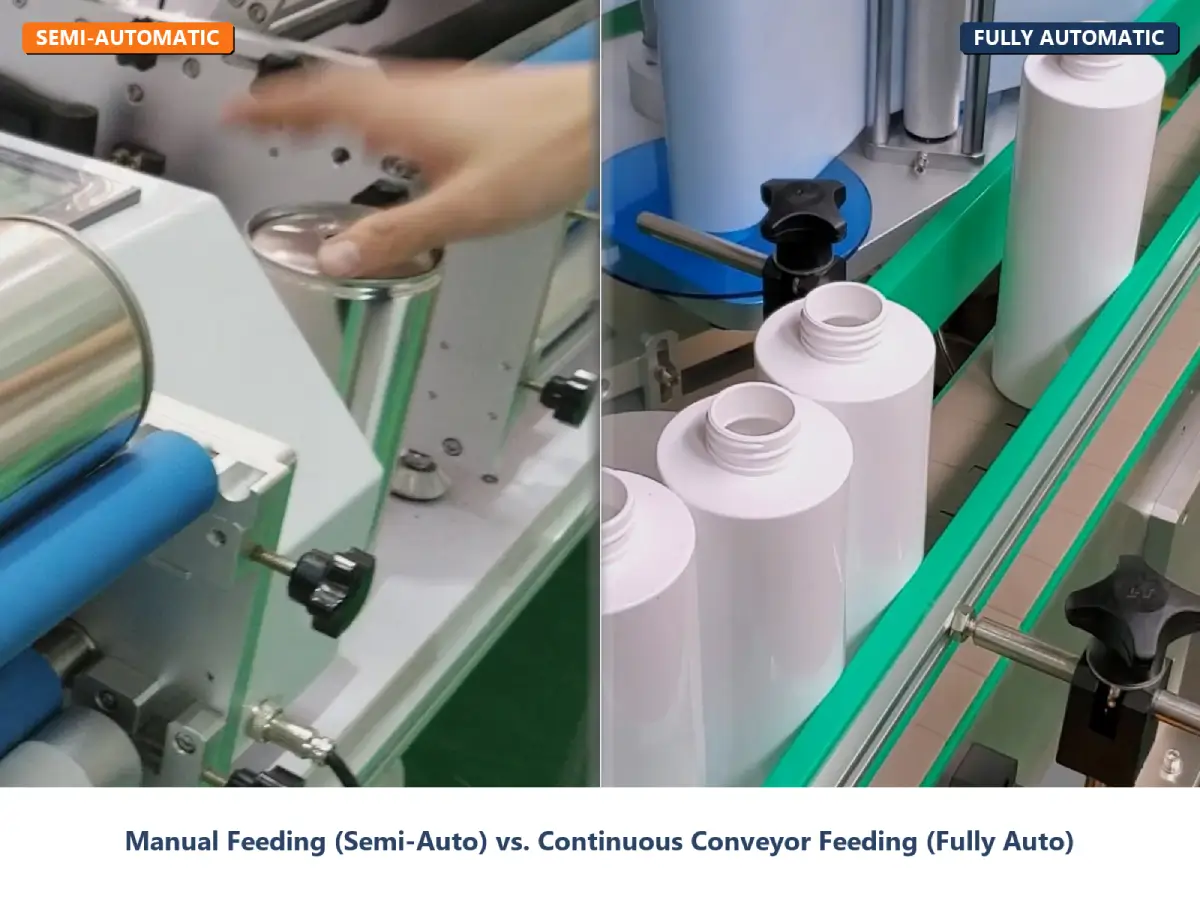
| Key Feature | Semi-Automatic | Fully Automatic |
|---|---|---|
| Production Volume | Small Batch | Medium to High Volume |
| Labor Requirement | Continuous Operator | Minimal Monitoring |
| Speed | 12-30 pcs/min | 60-300+ pcs/min |
| Equipment Size | Compact Benchtop | Conveyor Production Line |
| Initial Investment | Lower | Higher |
| Expansion Capability | Limited | Excellent |
| ROI Potential | Suitable for Startups | Suitable for Scale-Up Manufacturing |

| Item | Range |
|---|---|
| Accuracy | ±0.5mm to ±1mm |
| Speed | 12–300 pcs/min |
| Bottle Diameter | 10–150mm |
| Label Width | 5–700mm |
Direct access to manufacturing resources helps streamline communication, improve project efficiency, and support competitive equipment pricing.
Customized machine configurations can be developed to accommodate unique container shapes, labeling requirements, and production targets.
Our engineering team assists with machine selection, application evaluation, and production line integration planning.
Structured production processes and coordinated project management help keep equipment delivery schedules on track.
Familiar with international shipment requirements, export documentation, and global packaging equipment projects.
Technical guidance, remote support, and spare parts assistance are available to help maintain reliable machine operation.
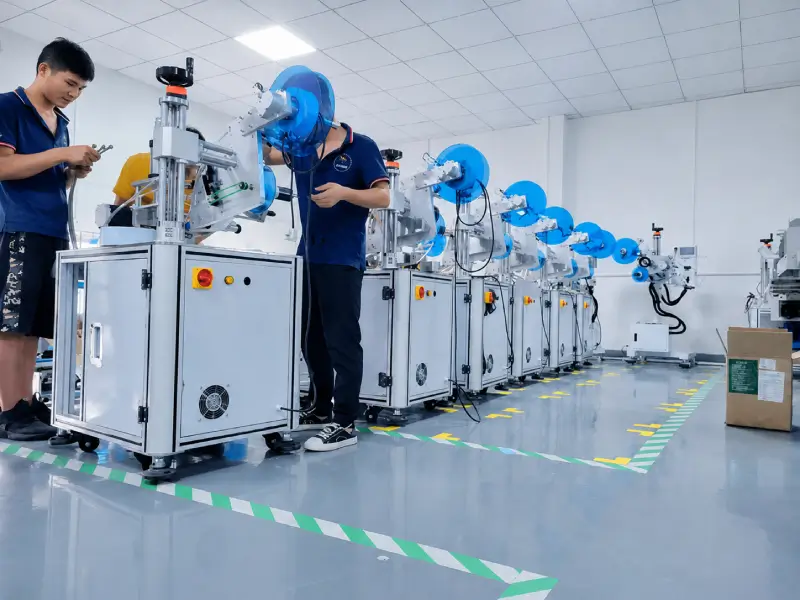
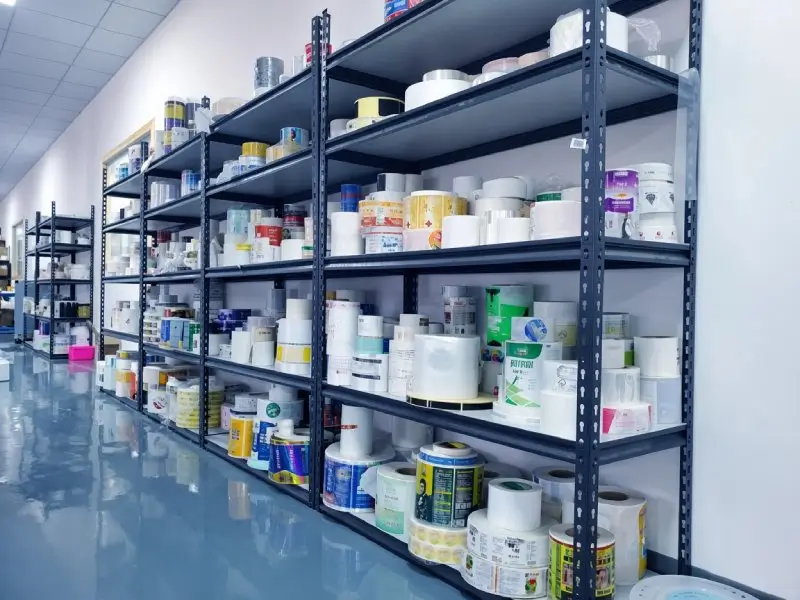
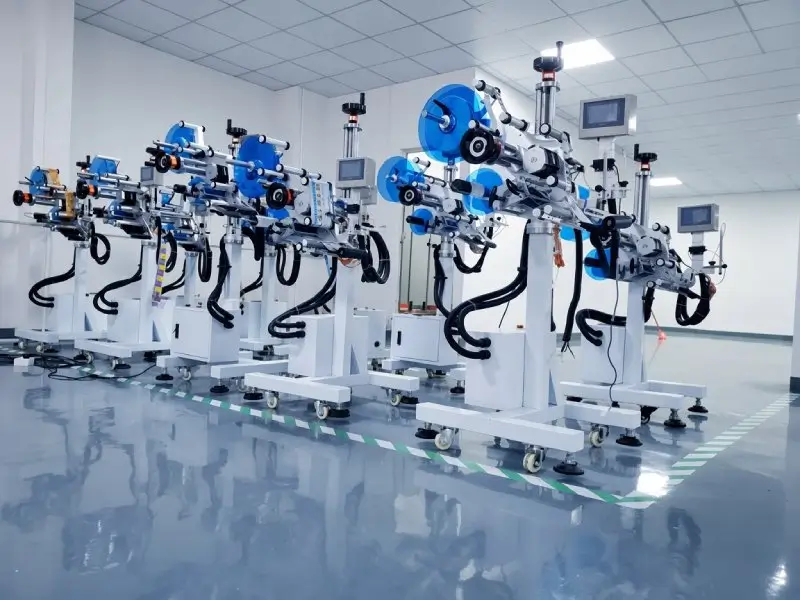
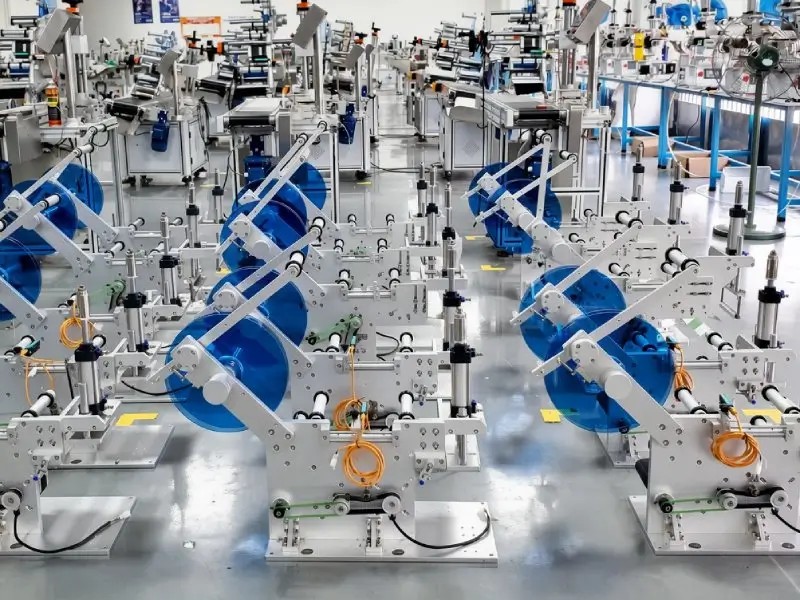
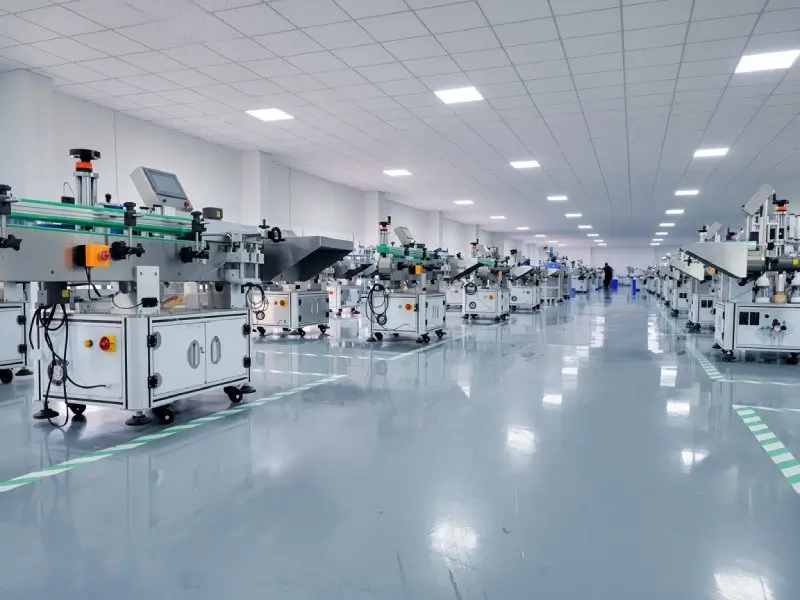
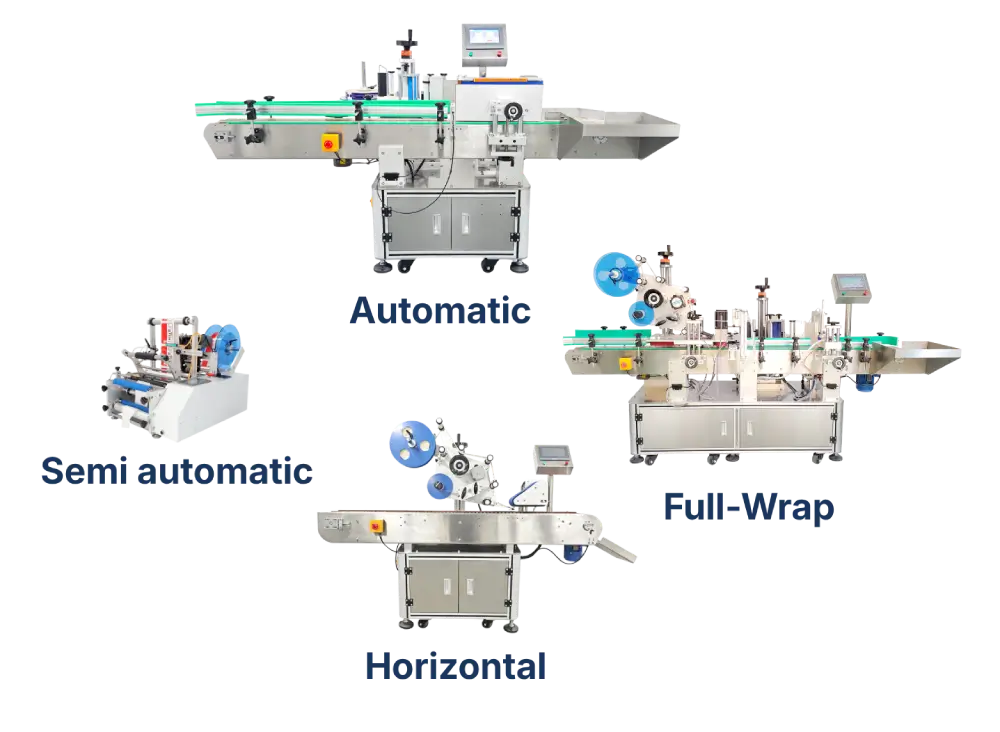
The primary difference is the level of automation and production output. Semi-automatic machines require manual bottle loading and unloading, making them suitable for lower-volume operations. Fully automatic systems integrate directly into conveyor lines and support continuous production with minimal operator intervention.
Yes. Most round bottle labeling machines are designed with adjustable guides and settings that allow them to accommodate a range of bottle diameters and label dimensions. Changeovers can typically be completed through mechanical adjustments and control system settings.
Yes. Our round bottle labeling systems can be configured for wrap-around label applications. Depending on the container shape and positioning requirements, additional positioning features may be available to improve alignment accuracy and label consistency.
Yes. Our labeling systems can be integrated with compatible coding and marking equipment, allowing production dates, batch numbers, barcodes, and traceability information to be printed during the labeling process.
Yes. Fully automatic labeling systems are designed to work alongside upstream and downstream packaging equipment, including filling machines, capping systems, conveyors, and case packing equipment.
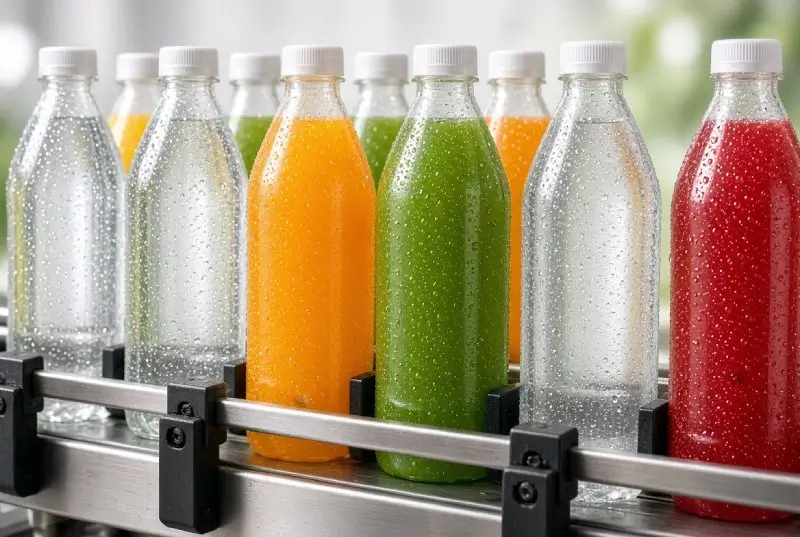
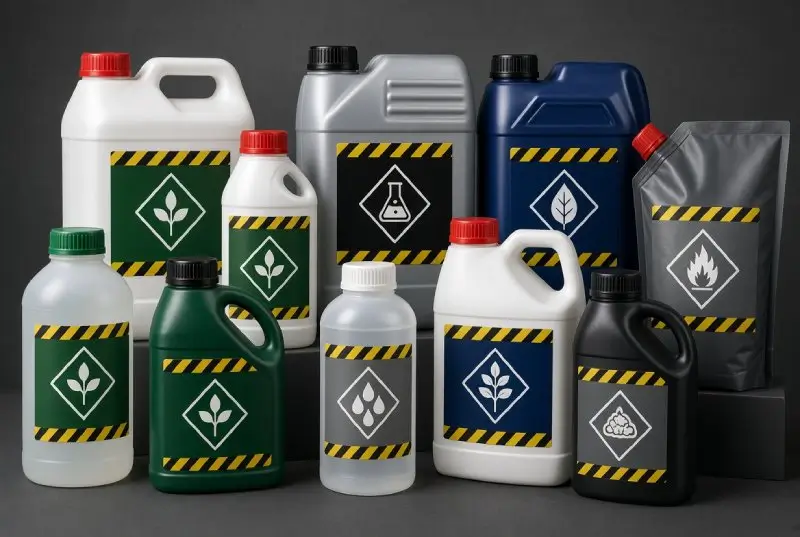
Our labeling machines are suitable for a variety of cylindrical containers, including glass, PET, PE, PP, metal, and other commonly used packaging materials found in pharmaceutical, cosmetic, food, beverage, and chemical industries.
Yes. Optional sensor configurations are available for applications involving transparent, clear-on-clear, or reflective labels. The recommended sensor type will depend on the label material and application requirements.
We provide ongoing technical assistance, including installation guidance, operational support, troubleshooting assistance, spare parts support, and remote communication to help customers maintain reliable production performance.
Tell us about your application, and our team will recommend the right machine for your production needs.
We usually respond within 1 business day.